

Depop and Vinted look like they serve the same seller: someone with a rail of secondhand clothes and buyers who grew up shopping on their phones. In practice, the same jacket can sit for a month on one and sell in a weekend on the other. If you sell fashion to younger buyers, listing on both is the easiest way to get more eyes on every item without buying more stock.
This guide walks through how to crosslist on Depop and Vinted, field by field, so the second listing takes two minutes instead of ten.
How Depop and Vinted buyers differ
Depop buyers shop for a look. Depop has always positioned itself around Gen Z, and it browses like a social feed. Buyers follow shops, scroll by aesthetic, and search for things like “y2k”, “gorpcore”, or ”90s grunge” as often as they search for a brand. Styled photos on a person or a clean background do noticeably better than a flat lay on a duvet.
Vinted buyers shop for a deal. Vinted buyers filter hard by brand, size, and price, and they make offers. Practical basics sell steadily: Zara, H&M, Nike, Levi’s, kids’ clothes. Clear, honest photos and the right size filter matter more than styling.
The overlap is real, especially for vintage, streetwear, and trend pieces. A Carhartt WIP Detroit jacket or a pair of Levi’s 501s will find buyers on both. A basic Primark cardigan probably belongs on Vinted only, and a one-off hand-painted top probably belongs on Depop first.
Fees and shipping on each platform
Vinted charges private sellers no selling fee. The buyer pays a fee on top of your price at checkout, so your asking price is what you receive. Shipping is handled through Vinted: the buyer pays postage and you print or show the label it generates.
Depop removed its 10% selling fee for sellers in the UK and US in 2024. You still pay payment processing on each sale, calculated on the total the buyer pays including shipping, and Boosted listings carry an extra fee on sales they generate. Depop’s prepaid shipping labels are only available to sellers in the UK and US. Everyone else ships themselves and sets a shipping price.
What this means for pricing: the same $40 price pays you $40 on Vinted and a little less on Depop. Most sellers keep one buyer-facing price and accept the small difference rather than running two price lists.
How to crosslist on Depop and Vinted, field by field
Photos, measurements, flaw notes, and most of your description transfer directly. The fields are where the work is. Here is the same item, a Carhartt WIP Detroit jacket in men’s M, filled out on both.
Depop fields
- Category and subcategory. Menswear, then Coats and jackets. Get the subcategory right, since Depop’s browse pages are built from it.
- Size. Pick from the list for that category. Put real measurements in the description too: pit to pit and length.
- Brand. Choose the brand from Depop’s list rather than typing it only in the description, so the item appears in brand filters.
- Condition. Be conservative. If there’s fading on the cuffs, choose the lower condition and photograph it.
- Style and colour. Style is the field Vinted doesn’t have, and it matters on Depop. Pick the styles a buyer would actually search, like “streetwear” or “workwear”, not every option that vaguely fits.
Your Depop description should open with the item and its best detail: “Carhartt WIP Detroit jacket, faded brown duck canvas, blanket lined. Size M.” A few relevant hashtags at the end help it show up in search. Stuffing it with unrelated brand names doesn’t.
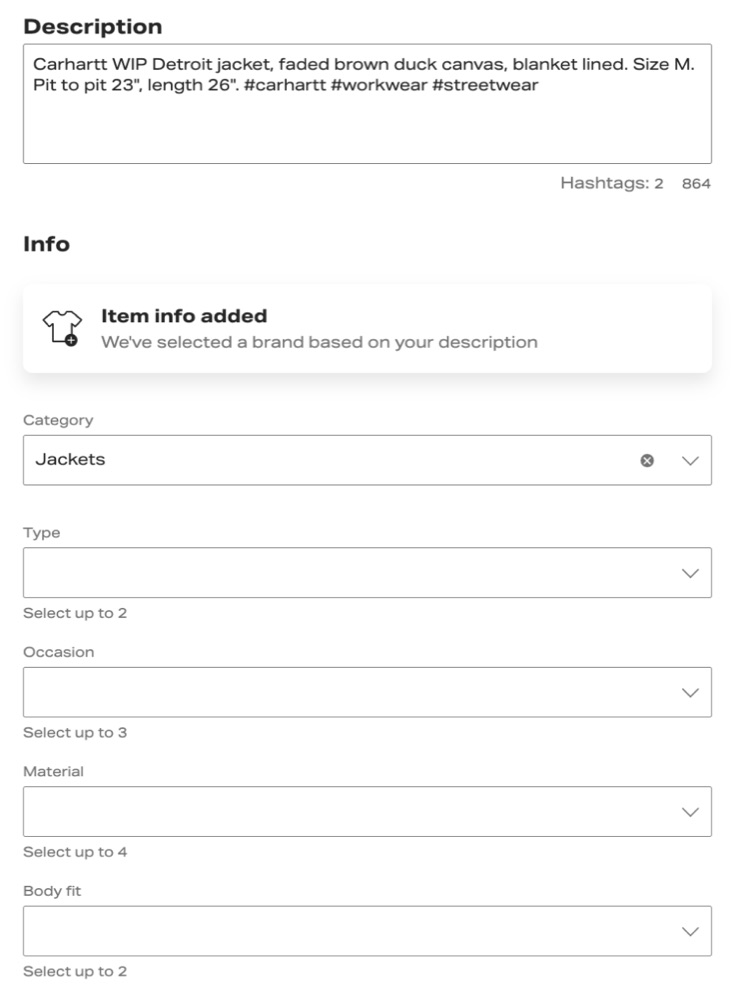
Depop filled in the brand from the description and suggested the category.
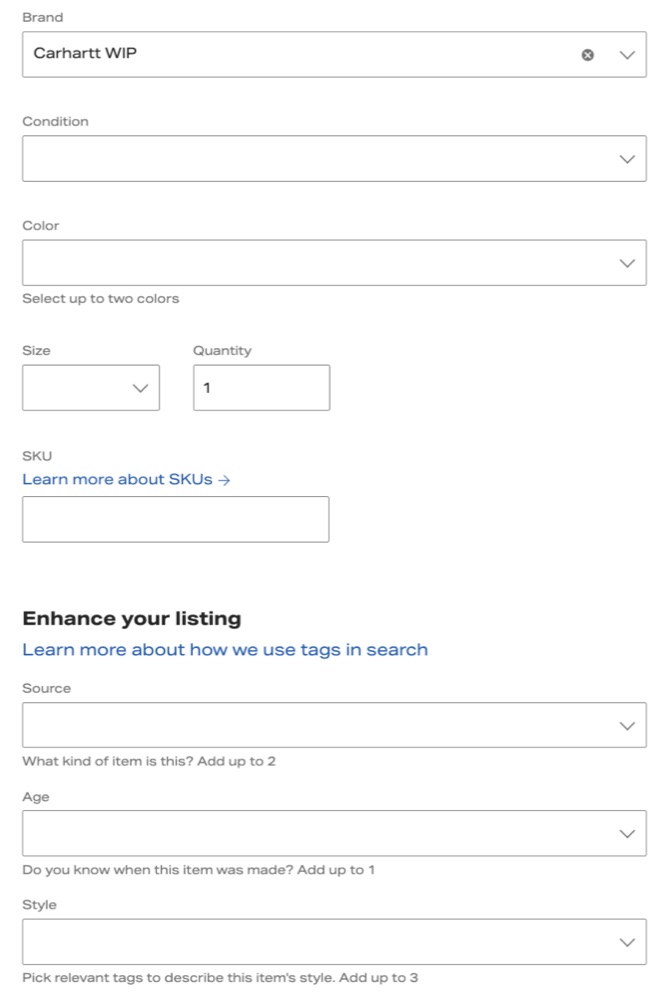
Further down: condition, colour, size, and the style tags Vinted doesn’t have.
Vinted fields
- Title. Keep it short and literal: “Carhartt WIP Detroit jacket, brown, men’s M”. Vinted buyers search for brand and item type, not vibes.
- Category. Vinted’s category tree goes deep: Men, Clothing, Outerwear, Jackets. Go all the way down, since the size options depend on it.
- Size and brand. Same as Depop, picked from the lists so filters work.
- Condition. Vinted’s condition labels are its own. Match the honest condition you chose on Depop, not the most optimistic label available.
- Colour. Required on Vinted, and buyers filter by it.
- Parcel size. Vinted suggests a size based on your item details, and you confirm it. Measure the packed parcel against the carrier’s limits before a buyer checks out, because the size can’t be changed once they’ve paid.
On Vinted, drop the hashtags and the aesthetic language. A compact description with measurements and condition notes reads better there.
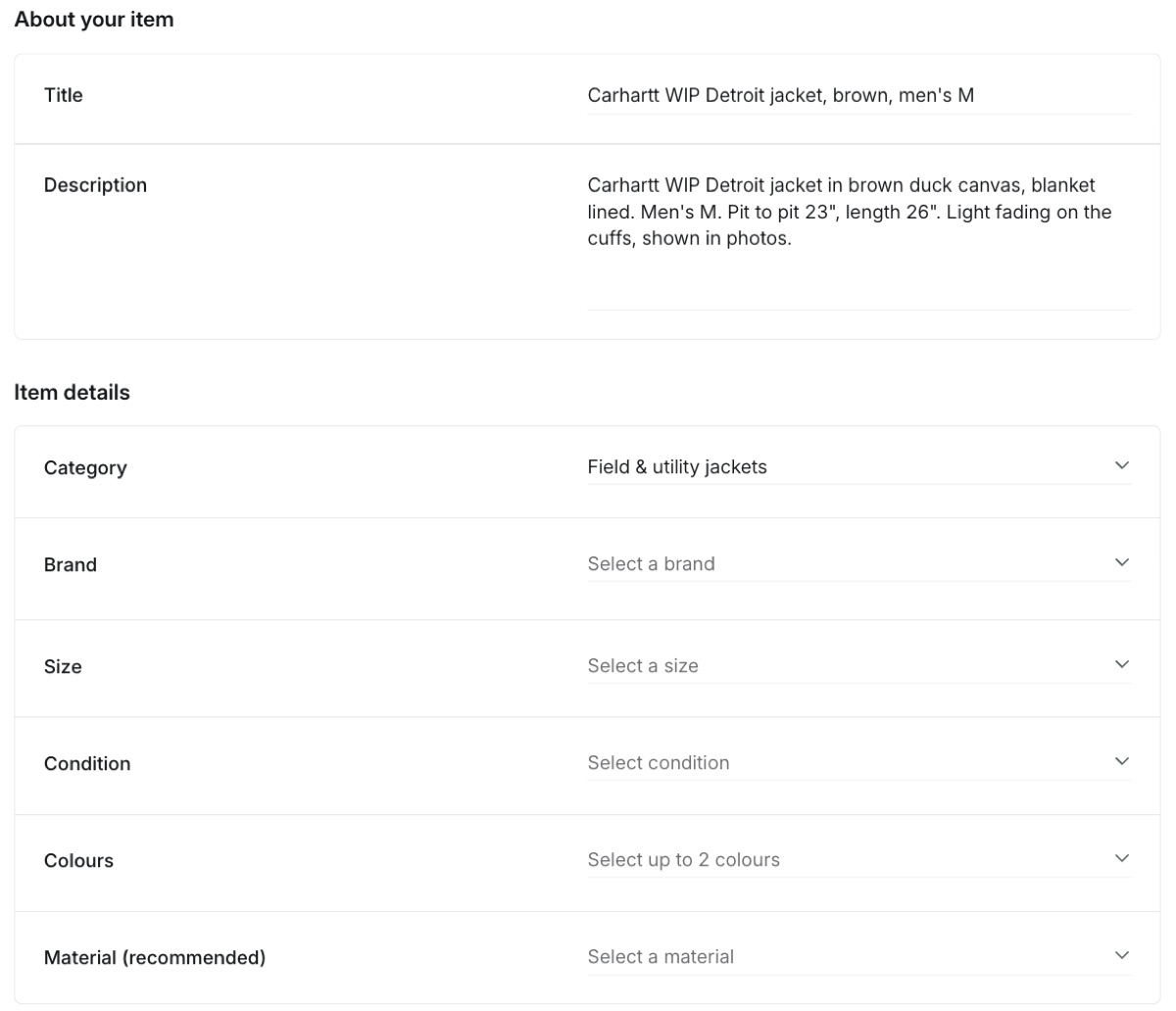
Vinted shows brand, size, and condition once you pick a category.
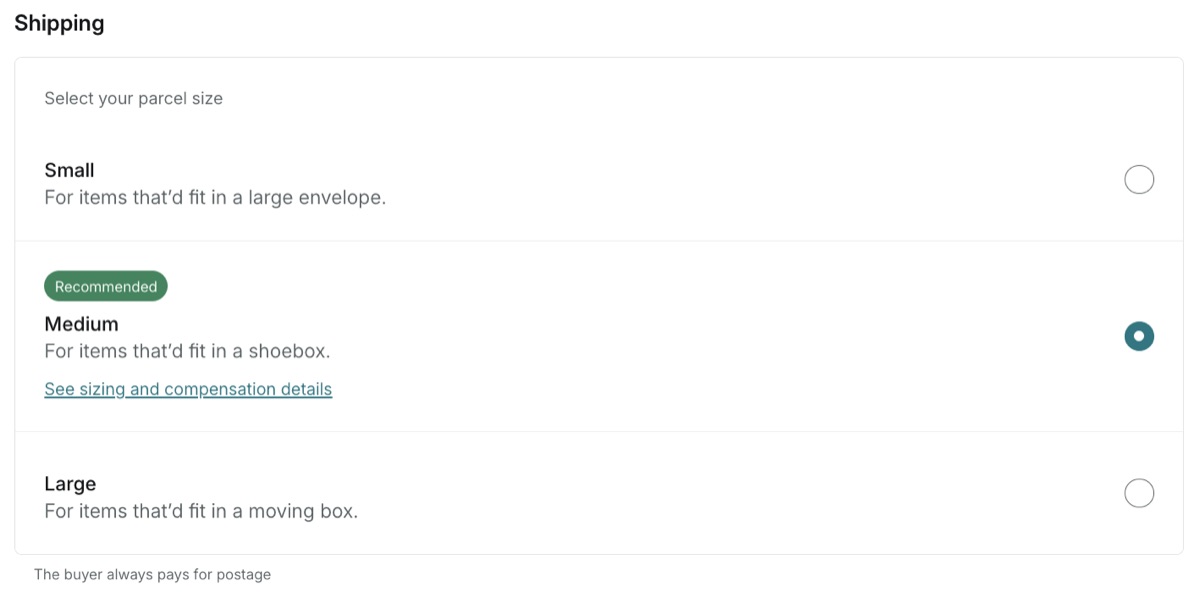
Vinted recommends a parcel size; confirm it against the packed item.
How to avoid selling the same item twice
Double selling is the real risk of crosslisting on Depop and Vinted, because both move fast. Vintage and trend pieces can sell within hours of listing, and an order you have to cancel costs you a review and a buyer’s goodwill. A few habits prevent it:
- Delist the same hour, not the same day. When a sale notification comes in on either app, open the other one and take the listing down before you do anything else, including packing.
- Don’t accept offers on both at once. If you’re negotiating with a Vinted buyer, hold off accepting a Depop offer until that conversation ends.
- Keep a simple log. A note listing each item and where it’s live means you never have to remember whether that jacket went up on both apps or just one.
- Mark items reserved carefully. Vinted lets you reserve an item for a buyer, but it’s still listed on Depop. Treat a reservation like a sale for delisting purposes.
Automating Depop and Vinted crosslisting
Doing all of this by hand works for a handful of items. Past that, the retyping and the delisting checks become most of your selling time.
List My Closet splits the work into two parts. You photograph the item, and AI writes the complete listing: title, description, category, size, brand, condition, colour, and a price estimate. Then a Chrome extension on your computer posts it to Depop and Vinted, along with Poshmark, Facebook Marketplace, and Mercari if you sell there, by filling each marketplace’s own form in your logged-in browser. The iOS app tracks every item as listed, sold, or shipped, and when something sells, you can delist it from the other marketplaces instead of hunting through each app.
It costs $9.99 a month or $49.99 a year. If you’re weighing it against other tools, the cheapest crosslisting apps comparison lays out what each one really costs, and if Vinted is your main platform, the best crosslisting app for Vinted goes deeper on that side.
Start with your trend pieces
Don’t crosslist your whole rail on day one. Pick ten items that fit both audiences, like vintage denim, branded streetwear, and statement jackets, and list them on Depop and Vinted with properly filled fields. After a couple of weeks you’ll see which categories move on which app, and that tells you where everything else should go.
Frequently asked questions
Can you sell the same item on Depop and Vinted?
Yes. Neither platform stops you listing an item you also have for sale elsewhere. The one rule that matters is delisting it from the other app as soon as it sells, so you never have to cancel an order.
Does Vinted or Depop charge sellers fees?
Private sellers on Vinted pay no selling fee, and the buyer pays a fee at checkout. Depop removed its 10% selling fee for UK and US sellers in 2024, but sellers there still pay payment processing on each sale, and Boosted listings cost extra. Check each platform's help pages for the current rates in your country.
Should I price items the same on Depop and Vinted?
Keeping one buyer-facing price is the simplest approach. Your payout differs slightly because Depop deducts payment processing and Vinted doesn't, so set the price with the Depop payout in mind.
Is there a tool to crosslist from Depop to Vinted?
Yes. List My Closet writes the listing from your photos and posts it to Depop, Vinted, Poshmark, Facebook Marketplace, and Mercari through a Chrome extension that uses your own logged-in accounts. It costs $9.99 a month or $49.99 a year.